

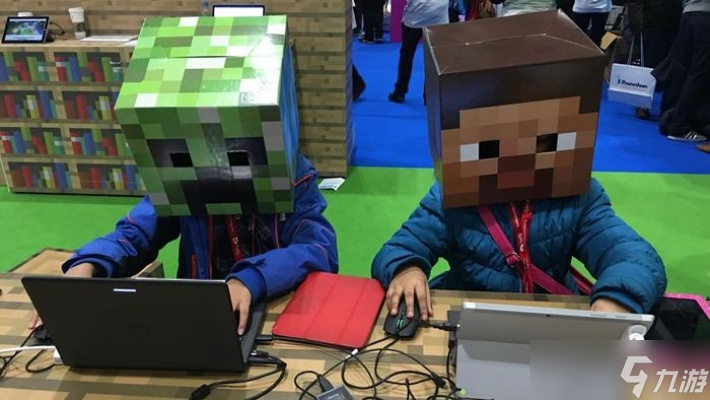
Minecraft attracts children with its highly free sandbox mechanics, allowing them to freely build, explore, and create in a pixelated world, stimulating boundless imagination and curiosity. The simple controls and open design make the game easy for children to pick up, while frequent updates—such as new biomes and redstone circuit challenges—keep the experience fresh. The multiplayer mode is a core appeal, enabling children to collaborate or compete with friends, enhancing social interaction and teamwork. This resembles the childhood experiences described in , where friends gathered to showcase redstone contraptions and received applause. This combination of creativity and socialization makes the game a virtual platform for children to express themselves and connect with peers.
What specific benefits does playing Minecraft offer children?
The game promotes child development on multiple levels:
Stimulates Creativity: Children can freely build houses, cities, or replicate real-world structures. The process of creating from scratch fosters original thinking and artistic expression.
Improves Attention Span: Survival mode requires dealing with zombies or resource shortages, training children’s sustained focus and quick-response abilities.
Enhances Spatial Cognition: The three-dimensional block world intuitively strengthens understanding of length, volume, and orientation, boosting geometric thinking.
Strengthens Reasoning Skills: Planning complex structures like redstone machines requires logical deduction and problem-solving, exercising critical thinking.
Promotes Resource Management: Limited materials demand rational allocation, cultivating habits of conservation and planning. These skills can transfer to real life. For example, players in learned to install software and edit videos through the game, laying a foundation for future technical abilities.
What potential risks should parents be aware of?
Despite its benefits, the game also presents risks that need management: Addiction may lead to imbalances in academics or daily routines, as seen in where a middle school student secretly played due to frequent updates, affecting studies; multiplayer environments or mods may expose inappropriate content, requiring parental supervision of safety settings; excessive gaming may also reduce outdoor activities, impacting physical and mental health. Parents should regularly check playtime and content to ensure virtual experiences do not interfere with real-life responsibilities.
How can parents properly guide children in playing Minecraft?
Effective guidance strategies include:
Setting Clear Rules: Limit daily playtime (e.g., half an hour) to prevent addiction, as referenced in the precautions for VR equipment in .
Adopting a Balanced Approach: As described in , a father supported gaming as the “ninth art,” while a mother cautiously opposed it. Parents should combine both perspectives, encouraging joyful growth without indulgence.
Participating Together: Play the game with children or discuss building projects to enhance understanding and parent-child interaction.
Redirecting to Educational Applications: Guide children to apply gaming skills to learning, such as recording gameplay videos to learn editing or combining building projects with mathematical calculations. These methods help children extract value from entertainment and reduce conflicts.
How does Minecraft function in education?
Educators have integrated the game into curricula: Schools use it to cultivate spatial abilities and logical thinking. Children learn measurement, planning, and engineering principles through building. In writing instruction, gaming experiences serve as vivid material. For example, children write narratives titled “My Minecraft Story,” describing adventures and emotions, thereby improving expressive and narrative skills. shows children using game scenarios to practice writing, such as describing “grasslands and waterfalls,” accumulating lively material. This edutainment approach enables children to master academic skills through creation.
How can children improve their writing skills through the game?
Minecraft provides rich writing inspiration: Children can create stories based on in-game events, such as recounting their “silly mistakes” during their first contact with the game in , or the fictional novel in , integrating character growth into narratives. Using game screenshots and materials (like cherry blossom forests or buildings) as visual prompts enhances descriptive details. Teachers can guide structured writing using the SCQA framework (Situation, Conflict, Question, Answer) to transform in-game adventures into logical essays. This not only exercises language skills but also helps children process emotions, as seen in where a child built a memorial home for a deceased relative, expressing longing.


